
Home » Destinations » Kenya » Kenya animals
Kenya Animals
A Comprehensive Guide to Wildlife Safaris in Kenya
The Big Five in Kenya
When embarking on a safari in Kenya, one of the most common questions travelers ask is, “What animals will I see on safari in Kenya?” Kenya is renowned for its rich wildlife and diverse ecosystems, making it a premier destination for safari enthusiasts. The iconic “Big Five”—lion, leopard, elephant, buffalo, and rhinoceros—are the stars of any safari in Kenya. These magnificent animals can be spotted in various national parks and reserves, with the Maasai Mara being one of the most famous for Big Five sightings.
Other Wildlife Highlights
Beyond the Big Five, Kenya’s savannas, forests, and wetlands are teeming with an array of other wildlife. You can expect to see cheetahs racing across the plains, towering giraffes gracefully browsing the treetops, and large herds of wildebeest, zebras, and antelopes grazing in the open grasslands. The country’s diverse habitats also support a variety of bird species, from the colorful lilac-breasted roller to the majestic African fish eagle.
Unique and Elusive Species
For those interested in more unique and elusive species, Kenya offers opportunities to spot animals such as the endangered African wild dog, the rare black rhinoceros, and the wonderful Grevy’s zebra. Whether you’re a first-time safari-goer or a seasoned wildlife enthusiast, the question, “What animals will I see on safari in Kenya?” will be answered with a resounding display of nature’s incredible biodiversity.
Kenya’s wildlife safaris offer an unparalleled opportunity to witness some of the most iconic animals in their natural habitats. The country’s national parks, such as the Maasai Mara, Amboseli, Tsavo, and Lake Nakuru, provide diverse ecosystems where the Big Five—lions, leopards, elephants, rhinoceroses, and Cape buffalo—thrive.
The Maasai Mara is particularly famous for its lion prides and the Great Migration, a spectacular event where millions of wildebeest, zebras, and other herbivores cross the plains, often pursued by predators. Amboseli National Park, with Mount Kilimanjaro as its backdrop, is renowned for its large elephant herds and offers excellent opportunities for observing and photographing these majestic creatures up close.
Tsavo National Park, one of the largest game reserves in Kenya, is known for its diverse habitats, supporting all of the Big Five, including the unique red-colored elephants. Lake Nakuru National Park serves as a sanctuary for the endangered black rhino, providing a rare chance to see these magnificent animals in a more concentrated area. Beyond the Big Five, Kenya’s parks are home to a vast array of wildlife, including giraffes, zebras, hippos, cheetahs, and numerous bird species. These safaris not only offer thrilling wildlife encounters but also highlight the importance of conservation efforts in preserving Kenya’s rich biodiversity and natural heritage.
Travel Carefree Again
Book your private, custom tour of a lifetime with 100% confidence

The Big Five
In Kenya’s national parks, the Big Five—lions, leopards, elephants, rhinoceroses, and Cape buffalo—are key attractions that epitomize the rich biodiversity of the region. The Maasai Mara is renowned for its lion populations, where visitors can witness prides lounging in the savannah or hunting during the Great Migration. Leopards, though more elusive, can be spotted resting in acacia trees, while elephants roam in large herds across the plains. Amboseli National Park is particularly famous for its elephants, providing spectacular views against the backdrop of Mount Kilimanjaro. This park offers unparalleled opportunities to observe and photograph these majestic creatures in their natural habitat.
Rhinoceroses, especially the endangered black rhino, find refuge in protected areas like Lake Nakuru National Park, where they are more easily spotted due to the park’s smaller size. Tsavo National Park, one of Kenya’s largest reserves, hosts all of the Big Five, with notable populations of Cape buffalo and unique red-colored elephants from the park’s volcanic soil. Tsavo’s diverse habitats support a wide range of wildlife, including both black and white rhinos and elusive leopards. These animals are not just tourist attractions but are integral to maintaining the ecological balance and biodiversity of Kenya’s national parks, making them vital to the country’s natural heritage and conservation efforts.

Primates
Kenya is home to a diverse range of primates, making it a fascinating destination for wildlife enthusiasts interested in these intelligent and socially complex animals. The country boasts several species of monkeys, including the widely recognized vervet monkey, which is often seen in a variety of habitats from savannahs to urban areas. These monkeys are easily identifiable by their black faces and hands, along with their grey fur. Another notable species is the olive baboon, which can be found in numerous national parks such as Amboseli, Maasai Mara, and Tsavo. Baboons are highly social animals, living in large troops and exhibiting a complex social structure.
In addition to monkeys, Kenya is also home to several species of colobus monkeys, including the striking black-and-white colobus. These arboreal primates are typically found in forested areas such as the Kakamega Forest and Aberdare National Park. Colobus monkeys are known for their beautiful long fur and distinctive markings, and they play a crucial role in their ecosystems by aiding in seed dispersal. Another unique primate found in Kenya is the lesser-known De Brazza’s monkey, which resides in the western regions of the country. With their distinctive white beards and orange brows, these monkeys are a rare and exciting sight for primate enthusiasts. Overall, Kenya’s diverse primate population adds to the rich tapestry of wildlife that makes the country a premier destination for nature and animal lovers.

Giraffes
Giraffes are one of the most iconic and beloved animals in Kenya, known for their towering height and graceful movements. The country is home to several species of giraffes, including the Maasai giraffe, which is the most common and can be seen in various national parks such as the Maasai Mara and Amboseli. These giraffes are easily recognizable by their distinctive, irregular, star-shaped spots that extend all the way down to their legs. Maasai giraffes play a crucial role in their ecosystems, helping to shape the landscape by feeding on tree leaves, which promotes new growth and maintains the balance of the savannah.
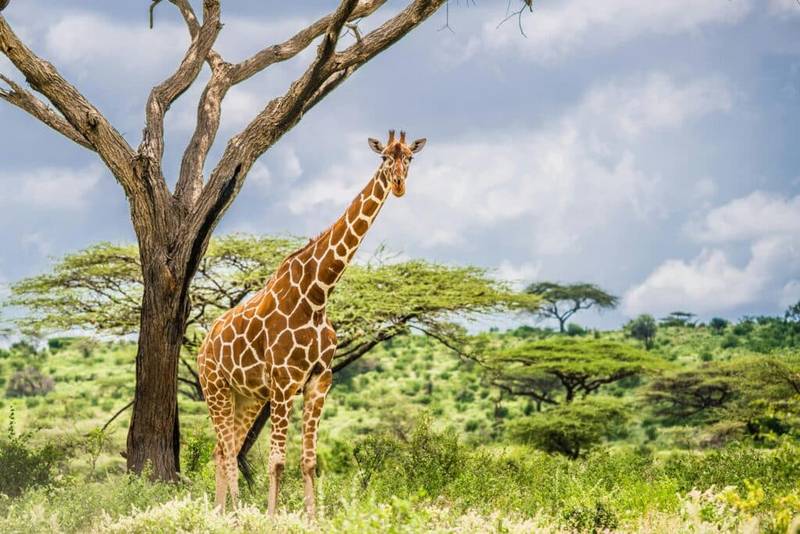
Another species found in Kenya is the reticulated giraffe, primarily located in the northern regions such as Samburu National Reserve. Reticulated giraffes are known for their striking coat patterns, featuring large, polygonal, liver-colored spots outlined by bright white lines. These giraffes are less common than the Maasai giraffes and are considered a conservation priority due to their declining numbers. Kenya also hosts the Rothschild’s giraffe, found in areas like Lake Nakuru National Park. Rothschild’s giraffes are distinguished by their lighter, cream-colored patches and lack of markings on their lower legs. All giraffe species in Kenya are vital to their habitats, aiding in seed dispersal and providing a food source for predators like lions. Conservation efforts are essential to protect these magnificent creatures and ensure they continue to thrive in Kenya’s diverse landscapes.

Zebras
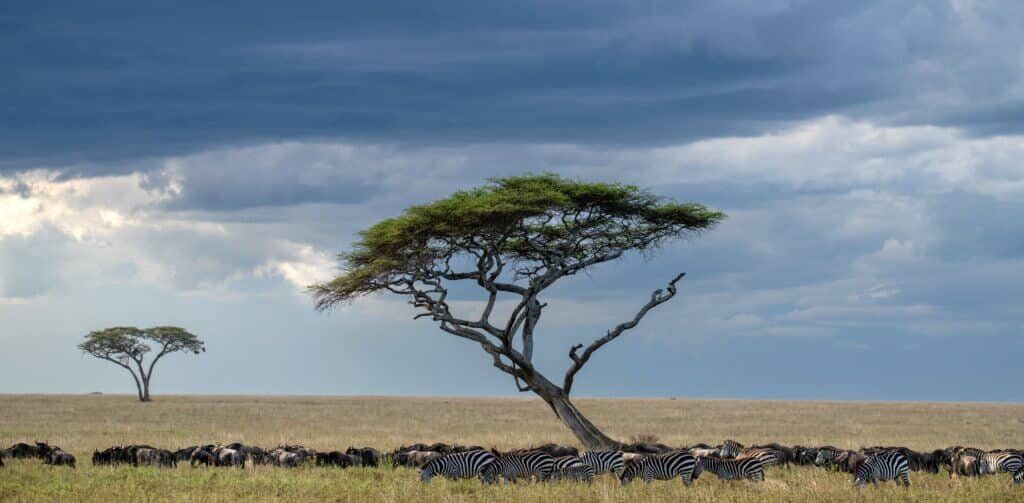
Zebras are one of the most iconic and easily recognizable animals in Kenya, known for their distinctive black and white stripes. They inhabit various habitats across the country, from grasslands and savannahs to woodlands and coastal plains. The most common species found in Kenya is the plains zebra, also known as the common zebra. These social animals form large herds, which serve as protection against predators such as lions and hyenas. They can often be seen grazing alongside other herbivores like wildebeest and gazelles, contributing to the dynamic ecosystem of Kenya’s national parks and reserves.
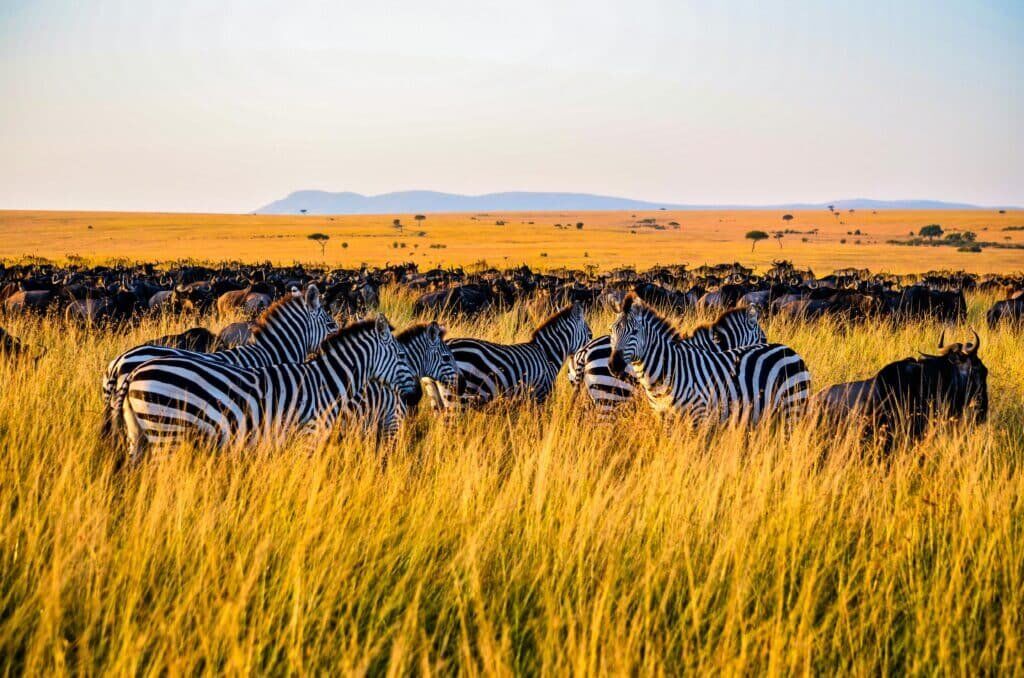
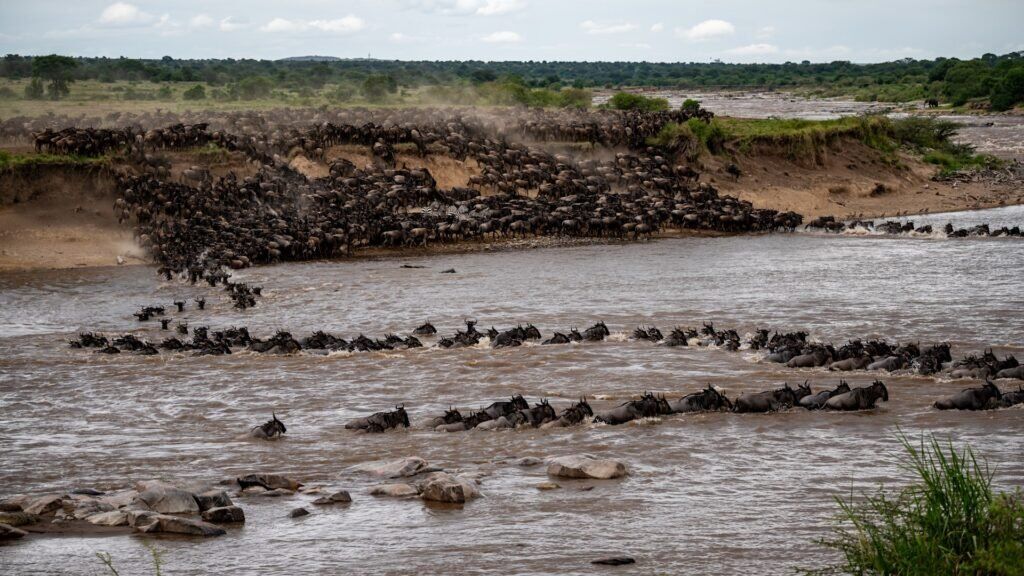
One of the most remarkable natural phenomena involving zebras in Kenya is the annual Great Migration, where millions of wildebeest, zebras, and other herbivores move between the Serengeti National Park in Tanzania and the Maasai Mara National Reserve in Kenya in search of fresh grazing grounds. During this migration, zebras play a crucial role, forming an integral part of the vast herds that traverse the savannahs, rivers, and plains. The sight of thousands of zebras moving in unison across the landscape is a breathtaking spectacle and a testament to the extraordinary wildlife experiences that Kenya has to offer.

Hippos
Hippos, one of Africa’s most iconic and imposing animals, are found in various waterways and lakes throughout Kenya, particularly in places like Lake Naivasha, Lake Victoria, and the Mara River. These semi-aquatic mammals spend much of their time submerged in water to keep cool and protect their sensitive skin from the harsh sun. Despite their herbivorous diet, hippos are known for their territorial and aggressive behavior, especially when encountered on land. In fact, they are considered one of the continent’s most dangerous animals, responsible for more human fatalities in Africa than any other large mammal.
In Kenya’s national parks and reserves, such as the Maasai Mara and Tsavo, hippos can often be spotted basking on riverbanks or floating lazily in water bodies. Their presence not only adds to the allure of these natural habitats but also plays a crucial role in maintaining the ecological balance of aquatic ecosystems. As herbivores, hippos graze on aquatic plants, helping to control vegetation growth and shape the structure of wetland habitats. Additionally, their dung serves as a vital source of nutrients for fish and other aquatic organisms, highlighting the interconnectedness of Kenya’s wildlife and the importance of preserving these habitats for the long-term conservation of hippos and other species.

Cheetahs
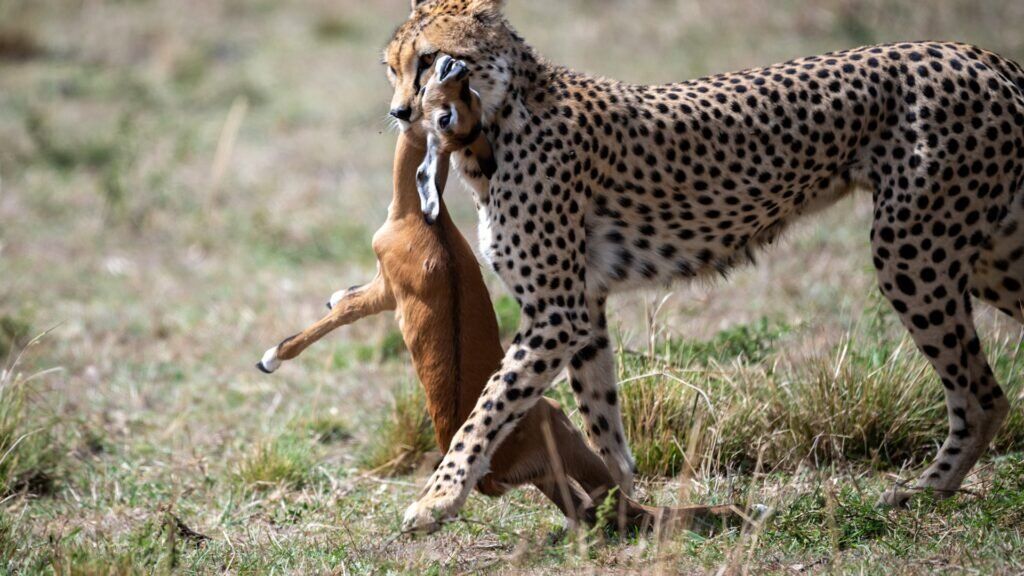
In Kenya, cheetahs are revered as the fastest land animals and are iconic symbols of the country’s vast savannahs and grasslands. These magnificent big cats can primarily be found in national parks such as the Maasai Mara, Amboseli, and Tsavo, where they thrive in the open plains, utilizing their incredible speed and agility to hunt prey. The Maasai Mara, in particular, is renowned for its high cheetah population density, offering visitors exceptional opportunities to witness these sleek predators in action as they chase down gazelles and other swift ungulates.
Cheetahs in Kenya face various challenges, including habitat loss, human-wildlife conflict, and competition with other predators. Conservation efforts, such as those led by organizations like the Kenya Wildlife Service and local conservation groups, aim to mitigate these threats and ensure the long-term survival of cheetah populations in the country. Through research, community outreach, and habitat protection initiatives, these efforts strive to maintain the delicate balance of Kenya’s ecosystems while allowing future generations to continue experiencing the exhilarating sight of cheetahs roaming the African plains.

Hyenas
Hyenas are prominent carnivores found throughout Kenya’s diverse landscapes, often congregating in clans within national parks and reserves such as the Maasai Mara and Amboseli. While hyenas may not boast the regal reputation of lions, they play a critical role in Kenya’s ecosystems as efficient scavengers and skilled hunters. Their distinctive vocalizations, including the iconic “laughing” call, can be heard echoing across the savannahs as they communicate with clan members and assert dominance within their social hierarchy.
Kenya’s hyena populations primarily consist of two species: the spotted hyena and the striped hyena. Spotted hyenas, with their mottled fur and robust build, are the most commonly observed species in Kenya and are known for their opportunistic feeding habits and powerful jaws capable of crushing bone. Striped hyenas, on the other hand, are more elusive and nocturnal, often scavenging under the cover of darkness. Both species are integral components of Kenya’s predator community, contributing to the balance of prey populations and helping to regulate the health of the ecosystems they inhabit.

Wildebeest
The wildebeest, also known as gnus, are iconic animals of the Kenyan savannahs, particularly famous for their mass migrations that occur annually in the Maasai Mara ecosystem. These migratory events, known as the Great Migration, involve millions of wildebeest, accompanied by zebras and other herbivores, moving in search of fresh grazing lands and water. The spectacle of thousands of wildebeest crossing the Mara River, braving crocodile-infested waters and lion ambushes, is one of the most remarkable wildlife experiences in the world, attracting visitors from all corners of the globe.
Within Kenya’s national parks and reserves, such as the Maasai Mara, Amboseli, and Tsavo, wildebeest can be observed year-round, though their numbers swell during the migration periods. These antelopes are well-adapted to the savannah environment, with their sturdy build, powerful legs, and keen senses. Despite being a staple prey for predators like lions and hyenas, wildebeest thrive in large herds, where their collective vigilance helps detect potential threats. Their presence in Kenya’s diverse ecosystems contributes to the balance of the food chain and underscores the significance of conservation efforts to preserve these majestic animals and their habitats.

Small Carnivores
Kenya is not only home to the iconic Big Five but also hosts a diverse array of smaller carnivores that play vital roles in the country’s ecosystems. Among these smaller predators are jackals, which are frequently observed in various habitats across Kenya, from savannahs to woodlands. These adaptable carnivores are often seen in pairs or small packs, scavenging for food and occasionally hunting small mammals and birds. Their distinctive howls can often be heard echoing across the plains, adding to the ambiance of the African wilderness.
Another notable carnivore in Kenya is the serval, a slender and agile cat with striking spotted fur. These elusive predators are primarily found in grasslands and savannahs, where they hunt rodents, birds, and insects. Known for their exceptional leaping ability and keen hunting skills, servals are adept at catching prey in tall grasses. While sightings of servals can be rare due to their secretive nature, they are occasionally spotted during night drives in national parks such as the Maasai Mara and Amboseli. Kenya’s smaller carnivores contribute to the intricate web of predator-prey interactions, ensuring the balance and health of its diverse ecosystems.

Birdlife
Hyenas are fascinating and highly adaptable animals found throughout Tanzania, with the spotted hyena being the most prevalent species. These carnivorous mammals are known for their distinctive laughing calls, which serve as social communication within their clans. Hyenas live in matriarchal societies where females are larger and more dominant than males, and they exhibit highly cooperative behavior, particularly during hunting and feeding. Their strong jaws and powerful digestive systems allow them to consume and digest bones, making them highly efficient scavengers that play a crucial role in the ecosystem by cleaning up carcasses.
In Tanzania, hyenas inhabit a variety of environments, including savannas, grasslands, and even mountainous regions. They are particularly abundant in the Serengeti National Park, where they coexist with other iconic African wildlife such as lions, elephants, and zebras. Despite their reputation as scavengers, hyenas are also skilled hunters capable of bringing down large prey. Their presence is vital for maintaining the balance of the ecosystems in which they live, as they help control the populations of other animals and recycle nutrients back into the soil. Conservation efforts in Tanzania aim to protect hyena populations and their habitats, ensuring these unique creatures continue to thrive.
Popular Trips to Kenya

Best Places To Visit
Located approximately 180 kilometers (112 miles) north of Nairobi, Aberdare National Park is both conveniently reachable and strategically
The Mara River flows through Narok County in southern Kenya and the Mara Region in northern Tanzania. The
Laikipia sprawling on the edge of the Northern Frontier, the Laikipia Plateau stretches from the slopes of Mt
Best Time To Visit
Kenya, straddling the equator, boasts a tropical climate. The ideal time for your vacation depends on your planned activities. For more details, follow the link about Kenya.
Safety
While Kenya is widely regarded as a safe travel destination, it is advisable to travel in a group or with a local tour guide rather than independently. To ensure your safety during your visit, our experts have curated some essential guidelines for traveling in Kenya.
Things To Do
Live your safari dream on your Kenya tour with us – where the Masai Mara, the Great Migration, vast savannas, and untouched beaches await. Click the link below to explore our curated list of the top ten highlights, attractions, and activities to experience in Kenya.
From the Blog
What Our Guests Say
 Posted on Tripadvisor
 Seaside0823315452425 May 2026
Verified
Incredible experience The moment they came to pick us up I knew we were safe, staff were very friendly and welcoming. They made everything incredibly beautiful and so memorable . Food was delicious . We stay a day and half , they treated as so well , the atmosphere was amazing . This was one of the best trips . I would recommend it 100% for sure , best for group, individual and also family they gone make your trip most memorable . But I would say the admission fees are a little high but it’s worth it!!! Can’t to be backPosted on Tripadvisor Alex V19 April 2026Very interesting tour. It was a fantastic experience. Malley is a great person that made our trip safe and smooth! We have spotted a great number of wildlife animals, thousands of zebras abd gnus...Posted on Tripadvisor
 Ann B23 January 2026Excellent and Outstanding Trip Our 5 day safari with African Diurnal Safaris exceeded every expectation. The communication with Lameck was fast, clear, and professional from the very first message. Our guide was incredibly knowledgeable, attentive, and made us feel safe and comfortable throughout the entire trip. Every detail was perfectly organized — hotels, meals, routes, game drives — everything was handled with care and precision. We saw the Big Five, stunning landscapes, and experienced Tanzania in the most authentic way. Truly great value for money and a company you can fully rely on. Highly recommend African Diurnal Safaris.Posted on Tripadvisor
 Melanie M22 January 2026*A wonderful 8- day safari with our guide Elisante" African Diurnal Safaris is exceeded our expectations in every way, the booking process was smooth, with the team consistently responsive, accommodating, and tailoring our trip the way we wanted it. From the moment we landed in Kilimanjaro airport, everything went according to our plans. Our guide Elisante was exceptional - friendly, punctual, patient, highly knowledgeable, and a true professional. He ensured our safari through Tarangire, northern Serengeti for the great migration, and Ngorongoro crater.Thanks to Elisante's expert guidance, we had the privilege of witnessing breathtaking wildlife including the great migration at the Mara river, as well as lions, cheetahs, leopard, rhinos, buffaloes , elephants, the fascinating African "ugly 5", countless other species roaming the plains and Highlands, along with a incredible variety of birds - the wonders were endless.We are deeply grateful to African Diurnal Safaris and special thanks to Lameck who suggested a wonderful itinerary for us, as well as our guide Elisante for crafting such unforgettable experience for our family. These cherished memories will last a lifetime.Posted on Tripadvisor
 SRZ_London26 September 2025Amazing Safari An amazing experience in Kenya on safari. African Diurnal were great from the beginning booking to the end of the trip. They offered fantastic payment and cancellation terms that really made us feel comfortable. They were very clear with their communications beforehand and had everything prepared for our arrival in Kenya. Their driver (Robert) was truly fantastic, with local knowledge and a calmness that put us at ease straight away. His wildlife knowledge enabled us to have really close encounters with all of the big five! We also witnessed a cheetah and lion double kill on our last game drive! Amazing! Would highly recommend this company for an East African safari experience!Posted on Google
 Suresh Kumar15 April 2025
Trustindex verifies that the original source of the review is Google.
We embarked on a luxurious 12-day safari adventure in Tanzania and Kenya, during which we explored the breathtaking Serengeti and the renowned Masai Mara. This experience was not only wonderful but also far surpassed our expectations regarding the diverse wildlife and stunning landscapes we encountered. We were fortunate to observe hundreds of elephants, giraffes, buffalos, hippos, lions, and countless other species, including the magnificent leopards and cheetahs. The expertise and dedication of our guides, Elisante in Tanzania and David in Kenya, were significant highlights of our trip. Their extensive knowledge of the region and its wildlife, coupled with their genuine passion for their work, contributed to a seamless and delightful journey. I highly recommend African Diurnal Safaris.+4Posted on Google Jens Minke17 February 2025We had a really good 6 days of safari. Lameck is a perfect guide and a good and professional driver. And he is a really nice guy. We had many laughs and manu interesting talks. Best recomodations from Linda and JensPosted on Tripadvisor
 Linda M16 February 2025Very knowledgeable about wildlife and a perfect and safe driver who pays respect to wildlife 🐆 Lameck is the owner of this wonderful safari agency. He is born and raised a little outside Serengeti and knows tremendous much about the wildlife in Serengeti, Ngorongoro and Tarangire. He speaks perfectly English and during our shared dinner, we have talked about nature, politics, culture, religion, history - we have learned so much! Very importantly he is an experienced and safe driver who also takes care of the animals e.g. waiting for animals to cross roads in contrast to many other drivers we saw on our way. We experienced a flat tire on night - but no problem! Lameck could fix it right away 🙌 We are so happy, that we consider to hire the company next year for a safari in Uganda and/or Kenya 🦒Posted on Tripadvisor
 Peter S7 January 2025Amazing Safari with Diurnal Safaris After good advices for our custom made Safari we had a wunderful time in Serengeti, Ngorongoro and Tarangire! With our very kind driver Samson we spot the Big Five in 4 amazing days! We higly recommend Diurnal !!Posted on Tripadvisor
 Audley S14 December 2024Amazing 7 day safari experiences in Northern Tanzania Unforgettable safari experience with African Diurnal Safaris . I and my husband went on a 7-days safari adventure covering Tarangire, Serengeti, Ngorongoro and Lake Manyara national park and had the most spectacular experience. The guide Lameck goes above and beyond to give us an unforgettable safari. With Lameck’s help we managed to see all the big five’s and we had incredible experiences seeing both lions and Leopard hunting prey. The selected accommodations (Tortilis Camps and Karatu Tented Lodge) was top norch and food were great throughout the whole safari trip. Would highly recommend anyone going for a safari with African Diurnal Safaris and choose Lameck to be your safari guide you won't regret.


