Mkomazi National Park is a hidden gem amongst the parks of Tanzania. It is located in the northeastern part of Tanzania, below the slopes of the Pare and Usambara Mountains. Mkomazi extends to Tsavo National Park in Kenya. Together, these two parks form the Greater Tsavo Ecosystem with an area of 43,000 square kilometers.
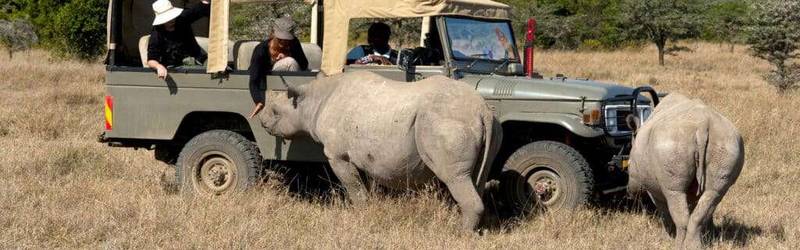
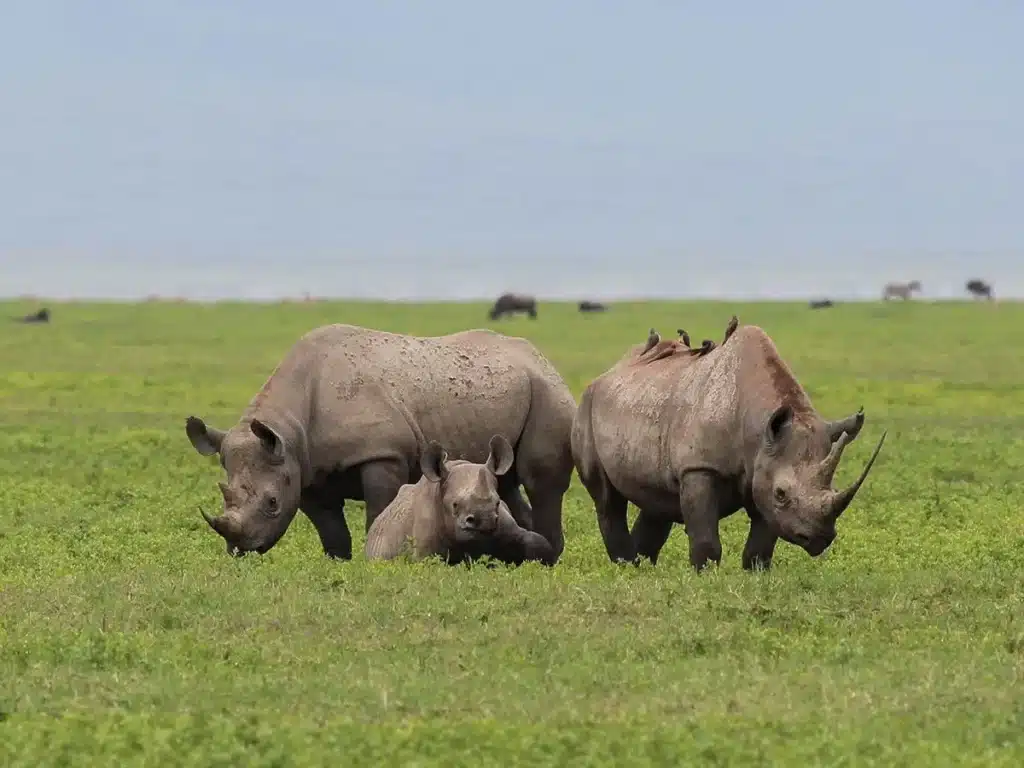
Mkomazi National Park showcases one of Tanzania’s most extraordinary ecosystems. Mkomazi serves as the southernmost extension of the Somali semi-arid belt and the Sahel Biosphere. It is a biogeographic area that connects the Sahara Desert to Central Africa. Consequently, numerous species that inhabit Mkomazi are exclusive to this region in Tanzania. The main attraction of the national park is the Mkomazi Black Rhino Sanctuary, where the chance of seeing these rare inhabitants is higher than in any other park in Tanzania. If you want to see these animals, be sure to include a visit to Mkomazi in your safari program.
Wildlife in Mkomazi National Park
In Mkomazi National Park, visitors have the opportunity to encounter the Big African Five: elephants, lions, leopards, buffaloes, and rhinos. However, the likelihood of spotting all five in a single day is not as great as in Ngorongoro. This is because the animal population here is lower, and they are less familiar with the vehicles of travelers compared to more frequented parks.
Historically, Mkomazi served as a hunting reserve, leading to the near extinction of many predators. As a result, locating leopards in Mkomazi can prove to be quite difficult. This often requires 3-4 days of searching. In contrast, the other members of the Big Five can typically be observed within a couple of days.
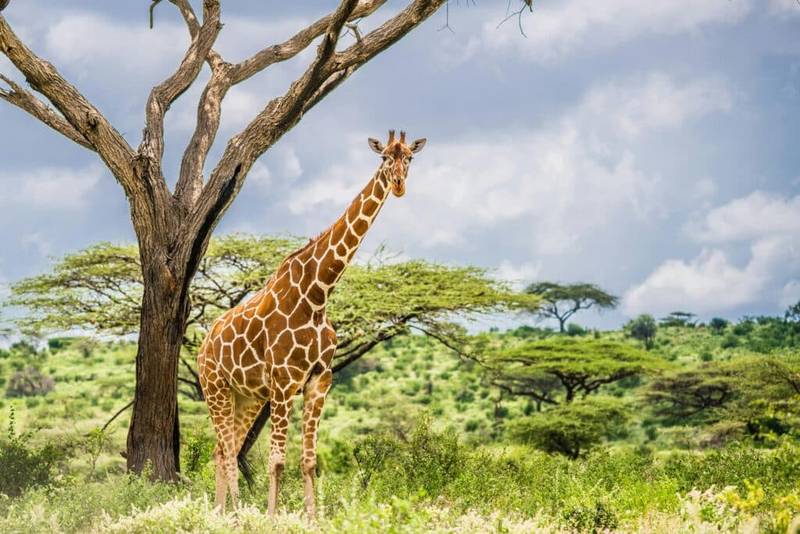
In addition to the Big Five, Mkomazi is home to a variety of other African wildlife, including giraffes, hippos, zebras, hyenas, and African wild dogs. Herbivores are more commonly seen than predators and are usually found in proximity to the Dindira Dam.
Moreover, Mkomazi National Park is one of the most interesting destinations in northern Tanzania for bird watchers. Over 400 species of birds reside here.
Black Rhino Sactuary
In 1989, the Tanzanian government extended an invitation to the George Adamson Wildlife Preservation Trust. This led to the introduction of the endangered black rhino into a heavily protected, fenced area within the park known as the Mkomazi Rhino Sanctuary.
Amid the rhino poaching crisis, the concept of “protecting the fortresses” has become crucial. Yet, it is equally vital to win the support and understanding of local communities. This ensures that Mkomazi never faces a mass extinction of its rhino population again. In 2012, Prince William made a visit to Mkomazi National Park to gain insights into the conservation efforts taking place at the forefront of this Tanzanian national park.
The Mkomazi Rhino Sanctuary is dedicated to establishing a sustainable breeding population of 50 black rhinos. The aim is to use their offspring to bolster the existing populations across Tanzania. The rhinos residing in the Mkomazi Rhino Sanctuary account for nearly 30% of the total black rhinoceros population in Tanzania. This highlights the significance of the Mkomazi rhinos, not just for the nation, but also for the future of this vulnerable species. During his visit to Mkomazi, Prince William participated in the Mkomazi educational initiative at Rafiki Wa Faru. There, children from 14 local villages are educated about rhinos and other wildlife, fostering hope that the Mkomazi rhino population will never again be decimated by poachers.
When to Visit Mkomazi National Park
The best time to visit Mkomazi is the dry season, spanning from June to November, when animals gather near the waterholes. However, the park is accessible throughout the year since most roads are suitable for all weather conditions. Throughout the year, visitors can encounter a diverse range of species, especially migratory birds. Even during the warm months from December to March, the nights become refreshingly cool thanks to the park’s elevation of 800-1,200 meters.