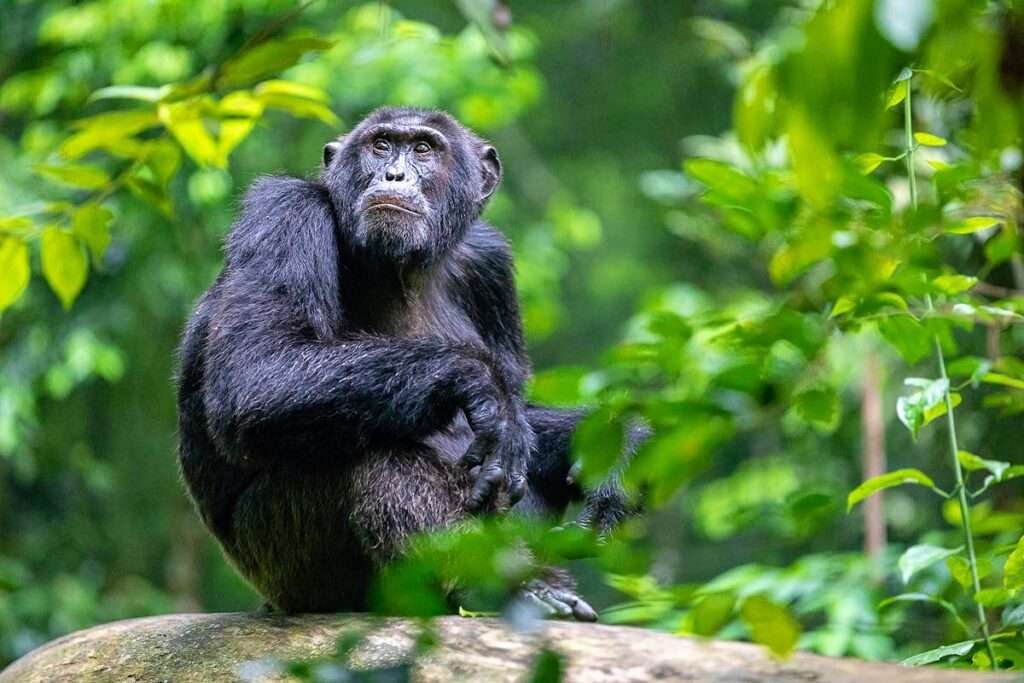
Kibale Forest National Park situated in western Uganda’s vibrant heartland, is renowned for its dense tropical rainforest and incredible biodiversity, particularly its high concentration of primates. Located approximately 320 kilometres west of Kampala, covering an area of approximately 800 square kilometres, this lush sanctuary represents one of the most accessible tropical forests in East Africa. Kibale Forest is often referred to as the “Primate Capital of the World” and is a major destination for eco-tourism and research.
The park’s landscape breathes with life, a dense green canopy thick with layers of leaves where sunlight filters through in fractured golden streams, and the air hangs thick with primate calls and bird song.
Geography and Terrain
Kibale Forest National Park’s terrain is characterized by lush rainforests, swamps, and grasslands:
- Rainforest: The park’s primary feature is its dense tropical rainforest, which provides a habitat for a vast array of plant and animal species.
- Swamps: Wetlands and swamps within the park support unique flora and fauna and contribute to the park’s ecological diversity.
- Grasslands: Patches of grasslands interspersed with the forest offer varied habitats for different wildlife species.
- Altitude: The park’s altitude ranges from 1,100 to 1,600 meters above sea level, creating a cool, moist climate ideal for forest growth.
Wildlife in Kibale Forest
Kibale Forest National Park is celebrated for its incredible biodiversity, especially its primate population. Notable wildlife includes:
- Primates: The park is home to 13 primate species, including:
- Chimpanzees: Kibale forest hosts one of the largest populations of chimpanzees in Uganda, making chimpanzee tracking a key attraction.
- Red Colobus Monkeys: These endangered primates are frequently seen in the park.
- L’Hoest’s Monkeys: Known for their distinctive white beards, these monkeys are another highlight.
- Black-and-White Colobus Monkeys: Easily recognizable by their contrasting black and white fur.
- Blue Monkeys, Red-Tailed Monkeys, and Grey-Cheeked Mangabeys: Among the other primates found in the park.
- Mammals: Other mammals in the park include forest elephants, buffalo, giant forest hogs, and several species of antelope.
- Birds: With over 375 bird species, Kibale is a birdwatcher’s paradise. Key species include the African grey parrot, great blue turaco, and green-breasted pitta.
- Reptiles and Amphibians: The park supports a variety of reptiles and amphibians, including several frog species and forest cobras.
- Butterflies: Kibale Forest is renowned for its vibrant butterfly population, boasting more than 250 recorded species.
Reasons to Visit Kibale Forest National Park
- Chimpanzee Tracking: The most popular activity, guided treks allow visitors to observe chimpanzees in their natural habitat. Chimpanzee habituation experiences are also available, offering a more in-depth look at their behavior and social structures.
- Bird Watching: With its rich avian diversity, Kibale forest is an excellent destination for birdwatching. Guided tours help visitors spot rare and endemic species.
- Nature Walks and Hiking: The park features several trails that cater to different fitness levels and interests, including the Bigodi Wetland Sanctuary, known for its birdlife and primates.
- Cultural Experiences: Engage with local communities to learn about their traditional practices, crafts, and lifestyles. Cultural visits often include performances of traditional dance and music.
- Night Walks: Guided night walks offer a chance to see nocturnal wildlife, including bush babies, pottos, and other night-active species.
- Forest Hikes: Explore the dense rainforest on guided hikes, discovering the park’s diverse flora and fauna.
Conservation and Sustainability
Kibale Forest National Park plays a vital role in the conservation of Uganda’s natural heritage. Key conservation efforts include:
- Primate Conservation: Intensive protection and monitoring programs for primates, particularly chimpanzees, to ensure their survival.
- Habitat Preservation: Efforts to preserve the park’s diverse ecosystems, including its rainforests, wetlands, and grasslands.
- Community Engagement: Collaborating with local communities to promote conservation awareness, education, and sustainable livelihoods through eco-tourism initiatives.
- Research and Monitoring: Ongoing scientific research and monitoring programs to study and preserve the park’s diverse ecosystems and wildlife populations.
Visitor Experience
Kibale Forest National Park ofer a range of accommodation for every preference on a Uganda safari, from rustic campsites to high-end lodges hidden within the forest. Eco-lodges are popular, built from sustainable materials with thatched roofs that blend seamlessly into the surroundings. The park’s serene environment and rich biodiversity provide a peaceful retreat for nature lovers, adventure seekers, and wildlife enthusiasts.